
Your sealer does more than protect your concrete – it determines how your concrete looks. And one of the most important things it affects is color enhancement: how deeply and richly the color of your concrete comes through after sealing.
Understanding color enhancement before you seal can save you from a result that surprises you – in the wrong way.
What Is Color Enhancement?
When a sealer “pops” the color of concrete, it makes the color appear richer, deeper, and more vivid. This is similar to what happens when water wets the surface of concrete. Dry concrete often looks pale and lifeless. Wet it, or seal it with a color-enhancing sealer, and the concrete comes alive.
The reason is physics. Dry concrete has a rough surface that scatters light in all directions – including a lot of white light. That white scatter is what makes unsealed concrete look pale and chalky.
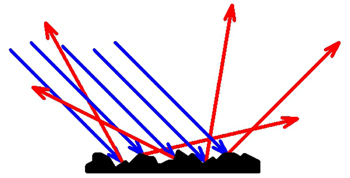
When you add water or a sealer, the surface becomes smoother and more uniform. Less white light scatters. More of the light that reflects back carries the actual color of the concrete. The result is richer, truer color.
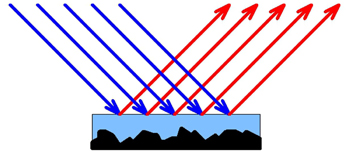
“Wet-look” sealers take this all the way – they make the concrete look like it’s permanently wet. High-gloss finishes produce the wettest look because they combine strong color enhancement with minimal white scatter.
Not all sealers enhance color equally. Some water-based acrylics do almost nothing to deepen color. Even if the surface looks shiny, the concrete beneath can still appear pale and flat – as if it were never sealed. Every sealer behaves differently, which is why testing before you commit to a full application matters.
Omega vs. Ovation: A Side-by-Side Example
CCI’s sealers Omega and Ovation show how dramatically sealer choice can affect the final look of the same concrete.
Omega is very color enhancing. Ovation is very slightly color enhancing. Here is the same piece of concrete sealed with each:
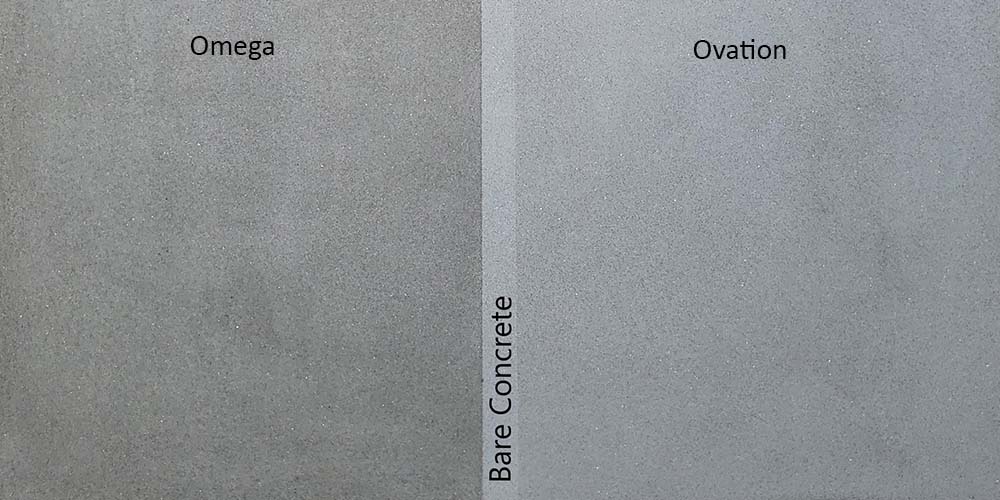
The difference is significant – and it’s not about quality. Both sealers perform beautifully. The difference is purely about how much color enhancement you want.
A Real-Life Story: Kelly C.’s Kitchen
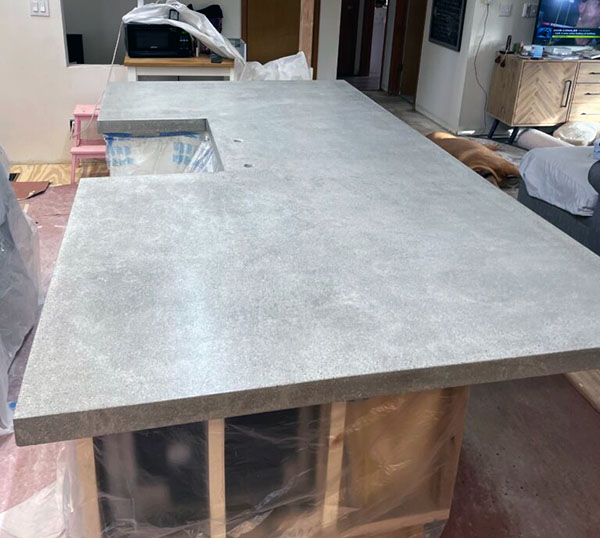
Kelly C. poured her own concrete countertops as a DIY project. She had used Omega in a previous home and loved it – so it was her first choice for her new kitchen. Here’s what happened.
“I used Omega years ago to reseal countertops in another house and knew how much better it was than other sealers. When my husband and I poured our own concrete countertops in our current house, I knew I wanted Omega. That being said, I had issues with it being splotchy this time. It drew attention to all of the little flaws in our trowel work. Maybe it has to do with the light color of the concrete this time.”
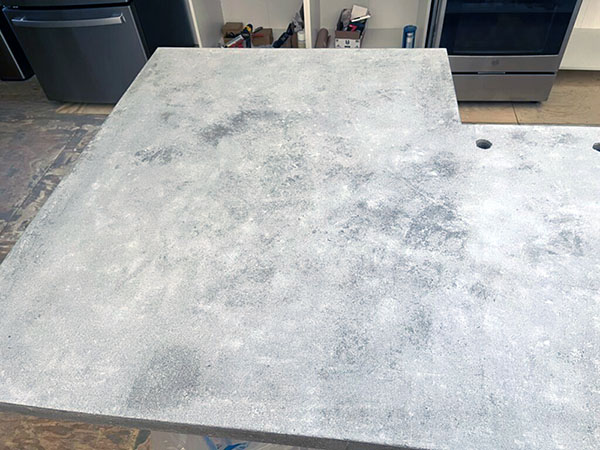
Omega’s color-enhancing property did exactly what it was supposed to do. It deepened the concrete and brought out variation in the surface. The problem was that the variation included trowel marks and small inconsistencies that Kelly preferred not to highlight.
Kelly’s solution: reseal with Ovation as the base coat, then top with Omega.
“After reading a lot of reviews and everything on the CCI website several times, I decided to sand off the Omega. I sanded everything down a lot more the second time and used Ovation + Omega the second time. It turned out WAY better. The Ovation sealed it without drawing attention to the flaws and then we put the Omega on top for the superior protection. We are really happy with the results now.”
Same concrete. Same Omega topcoat. Completely different result – because Ovation’s very slight color enhancement didn’t amplify the surface variation the way Omega alone had.
How to Choose the Right Sealer for the Look You Want
The key question is: how much color enhancement do you want, and how consistent is your concrete surface?
If you want rich, deep color and your concrete surface is smooth and consistent: Omega alone is an excellent choice. Its strong color enhancement will make your concrete look its best.
If you want a more neutral look, or your concrete has surface variation you’d prefer to minimize: Ovation as a base coat is the better starting point. Its very slight color enhancement protects the concrete without amplifying imperfections.
If you want Omega’s protection and durability, but with more controlled color: Use Ovation as your base coat and Omega on top – exactly as Kelly did. You get the best of both: a more even base color from Ovation, and Omega’s superior protective properties on the surface.
For more detail on how to use these two sealers together, see: How to Combine Omega and Ovation Concrete Countertop Sealers
Shop Omega and Ovation
Ready to seal? Both sealers are available in the CCI shop.
- Omega Concrete Countertop Sealer – very color enhancing, superior protection
- Ovation Concrete Countertop Sealer – very slightly color enhancing, matte to satin finish
Frequently Asked Questions
Will any sealer change the color of my concrete?
Yes – to some degree. Every sealer affects how light interacts with the concrete surface, which changes how the color appears. Some sealers, like Omega, are strongly color enhancing. Others, like Ovation, are very slightly color enhancing. A few water-based acrylics have almost no color-enhancing effect at all, leaving concrete looking pale even after sealing.
What does “color enhancing” mean?
A color-enhancing sealer makes the concrete look richer, deeper, and more vivid – similar to what water does when it wets the surface. It works by smoothing out the micro-texture of the surface, which reduces white light scatter and allows more of the colored light to reflect back.
Is color enhancement the same as gloss?
Not exactly. High-gloss sealers tend to be more color enhancing because a smooth, shiny surface reflects more colored light. But some sealers enhance color without being glossy. And some glossy sealers don’t enhance color as much as you might expect. They are related, but not the same thing.
Can I reduce color enhancement after the fact?
If you’ve sealed with a highly color-enhancing sealer and the result is more depth than you wanted, you can sand back and reseal with a less color-enhancing base coat – as Kelly did. It takes more work, but it’s the most reliable way to correct the look.
What if I’m not sure which sealer is right for my project?
Test first. Apply a small amount of each sealer to an inconspicuous area or a sample piece of the same concrete mix. Let it cure fully, then compare. The few minutes it takes to test can save you from a result you’re unhappy with.