
Ever wonder why the same concrete mix can create completely different looks and textures? The secret isn’t the mix itself – it’s how you manipulate the concrete consistency.
This guide shows you how to use one GFRC mix to achieve five distinctly different concrete consistencies, from bold hand-pressed textures to glass-smooth self-consolidating concrete.
The key? Strategic dosing of Integrity UltraFlow superplasticizer.
Why Concrete Consistency Matters More Than You Think
Your casting technique drives everything. A fluid mix perfect for direct casting will ruin a hand-pressed finish. A stiff mix ideal for textured surfaces won’t flow into intricate mold details.
That’s where UltraFlow comes in. This powerful polycarboxylate superplasticizer transforms the same base mix into whatever consistency your technique requires – no need to start from scratch each time.
Before You Start: Essential Guidelines
Note: All recommendations are for Integrity PowerBlend or PowerPack concrete.
Dosing is based on cementitious weight: Calculate UltraFlow as a percentage of cementitious material (cement plus pozzolans) in your mix (not total concrete weight). PowerBlend and PowerPack both specify the exact amount of cementitious material contained in the mix. Home center concrete typically does not.
Temperature matters: The dosing recommendations below assume concrete chilled to below 65°F (18°C) for extended working time. Colder concrete flows better and stays workable longer.
Start conservative: When in doubt, make a trial batch and begin with the lower end of the dosage range.
The 5 Concrete Consistencies
1. Stiff, Hand-Pressed Concrete
The Buddy Rhodes signature look
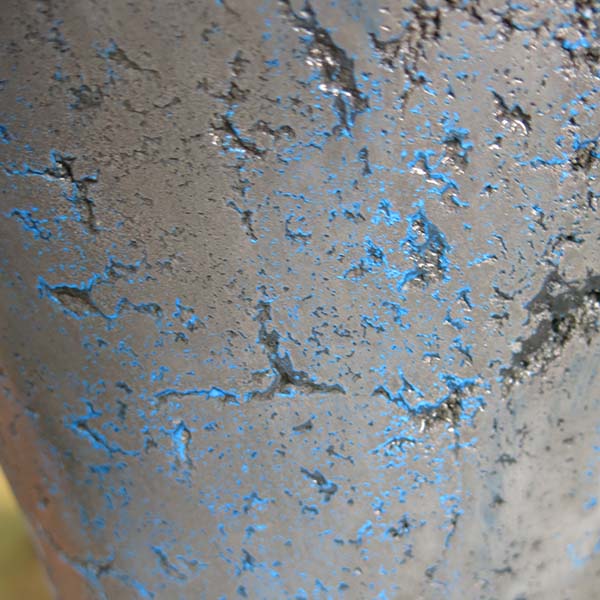
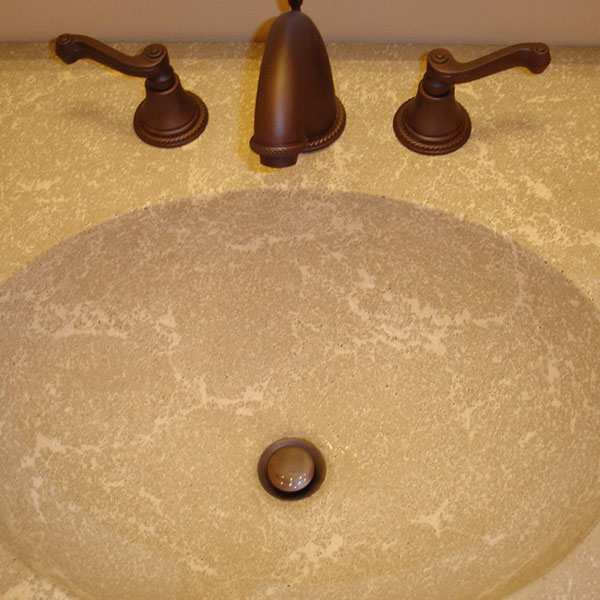
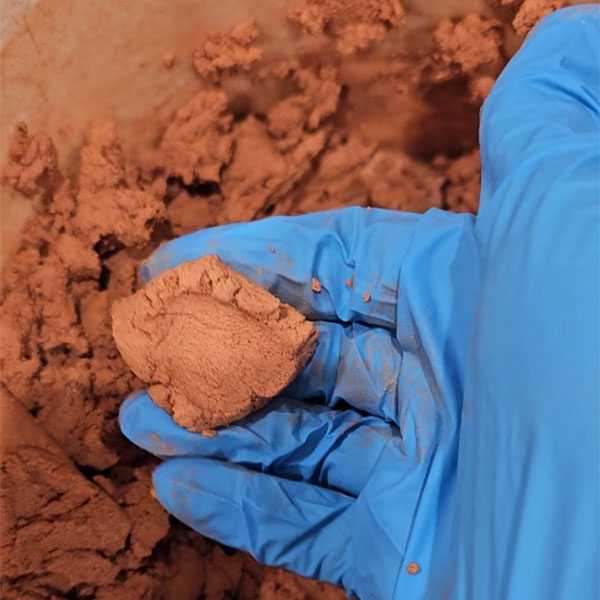
Characteristics: Bold fissures and a firm, clay-like texture that holds dramatic surface manipulation.
Best for: Creating strong visual texture, pressed finishes, and designs where the concrete’s hand-worked character is the focal point.
UltraFlow Dosage: 0%
Water-to-Cement Ratio: 0.27 to 0.30
Pro tip: Even without UltraFlow, keep your water ratio tight. This stiff consistency requires muscle to work but delivers unmatched textural impact.
2. Hand-Packed Concrete
Cohesive and workable


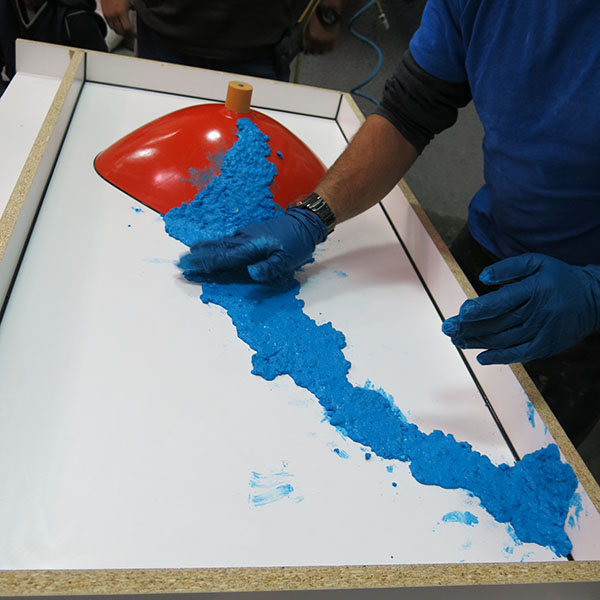
Characteristics: Softer than pressed concrete but still firm – imagine quality modeling clay. Creates subtle voids and delicate fissures rather than bold cracks.
Best for: Terrazzo face coats, controlled texture, and applications requiring careful hand placement without dramatic surface disruption.
UltraFlow Dosage: 0% to 0.1%
Water-to-Cement Ratio: 0.30 to 0.33
Pro tip: This sweet spot consistency packs easily without being sticky. If it feels too dry, add UltraFlow in 0.05% increments rather than adding more water.
3. Soft, Spreadable Concrete
The troweler’s friend

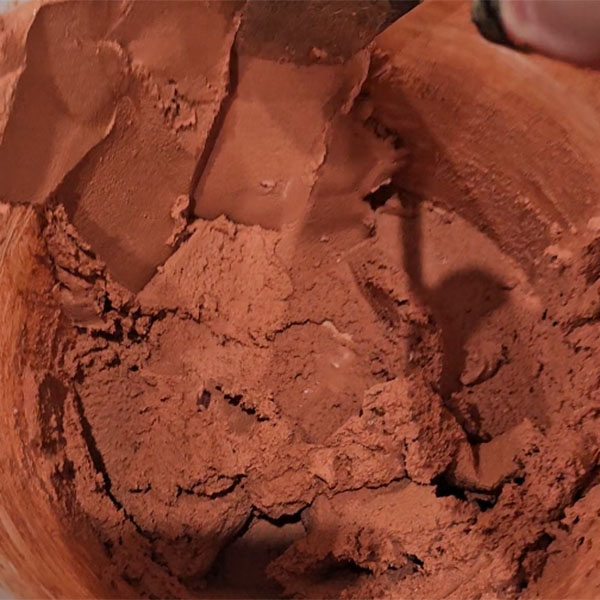
Characteristics: Thick, sticky, and easy to spread – like natural peanut butter. Clings to vertical surfaces in thin layers but won’t sag.
Best for: Troweled face coats, hand-applied backer layers on vertical surfaces, and any application requiring a workable paste that stays where you put it.
UltraFlow Dosage: 0.1% to 0.2%
Water-to-Cement Ratio: 0.30 to 0.33
Pro tip: This consistency is forgiving for hand application. It gives you time to work the surface without racing against the clock.
4. Sprayable Mist Coats
Vertical spray perfection
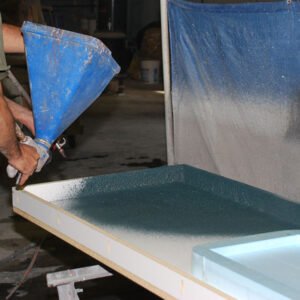
Characteristics: Creamy and fluid enough to spray smoothly, but with enough body to cling to vertical surfaces without sagging or running.
Best for: GFRC face coats on vertical or overhead surfaces, achieving pinhole-free finishes, and applications requiring a fine spray pattern.
UltraFlow Dosage: 0.10% to 0.15%
Water-to-Cement Ratio: 0.32 to 0.33
Pro tip: This narrow dosage window is critical. Too little and it won’t spray cleanly; too much and it slides off vertical surfaces. Test spray on a vertical board before committing to your mold.
5. Direct Cast / Self-Consolidating Concrete (SCC)
Pour and forget
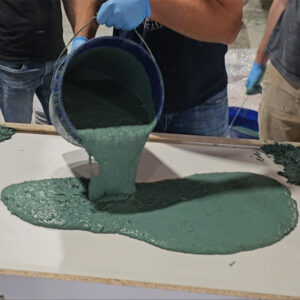
Characteristics: Flows like honey – highly fluid and pourable with zero vibration needed. Self-levels and eliminates air pockets through gravity alone.
Best for: Direct casting into complex molds, achieving glass-smooth surfaces, and any application where mechanical consolidation isn’t possible or practical.
UltraFlow Dosage: 0.4% to 0.85%
Water-to-Cement Ratio: 0.30
Special requirement: Chill concrete to below 60°F (16°C) to achieve optimal flowability
Pro tip: High-dose UltraFlow creates exceptional flow, but timing becomes critical. Colder temperatures are essential to extend your working window. The high fluidity comes with a trade-off: once it starts to set, it happens quickly.
Putting It All Together
The beauty of this system is its flexibility. You’re not locked into pre-mixed bags or proprietary formulas. You’re in control.
Start with your casting technique. What does the application require? Vertical spray? Hand packing? Direct pour?
Choose your consistency. Match the dosage to your technique using the guide above.
Make a test batch. Every shop has slightly different conditions. A small trial batch confirms you’ve nailed the consistency before committing to the full pour.
Adjust as needed. Concrete temperature, ambient conditions, and mixing time all affect results. Use these dosages as your starting point, then fine-tune based on what you observe.
The Bottom Line
One mix. Five completely different looks. That’s the power of understanding how to manipulate concrete consistency rather than relying on specialized mixes for every application.
Master these UltraFlow dosing strategies, and you’ll have the knowledge and confidence to tackle any GFRC project – from hand-pressed art pieces to precision-cast architectural elements.
Want to see these techniques in action? Check out our video showing six different looks from a single batch of GFRC concrete.
Ready to go deeper? Explore our Professional GFRC training to master the complete process, from mix design to finishing techniques.