
Pinholes are small holes left by air bubbles trapped against the mold surface during casting. Mixing whips air into every concrete mix, and ingredients such as polymers, superplasticizers, and pigments can turn that air into foam. The UltraDense defoamer built into PowerBlend and PowerPack destabilizes that foam, popping tiny bubbles so they combine into larger ones that rise more easily. A defoamer can’t make the air disappear, though. The bubbles still have to rise and escape on their own, and they can do that only if the concrete is fluid enough and you give them time.
Direct casting means pouring a highly fluid Self-Consolidating Concrete (SCC) mix straight into the mold, instead of spraying a mist coat or hand packing a stiffer mix. At the right consistency it flows like pancake batter and needs no vibration. How to Control Concrete Consistency: From Hand-Packed to Self-Consolidating Concrete explains how to adjust the same mix for each casting method.
The four techniques below are how to get the best surface quality from direct cast Glass Fiber Reinforced Concrete (GFRC) made with PowerBlend or PowerPack: chill the concrete, get the fluidity right, let trapped air escape, and pour slowly without remixing. (For a deeper look at why air gets trapped in the first place, see 6 Problems with Concrete Countertop Mix Designs and How to Prevent Them.)
Chill the concrete
Chilling slows the cement’s reaction, which keeps the concrete fluid longer while it rests and releases air. It also improves flow.
- Aim for a concrete temperature of 55 to 60°F (13 to 16°C). (This is lower than the 55-65°F recommendation for any concrete mix consistency.)
- Replace part of your mix water with ice, measured by weight. Make sure the ice has fully melted before you move on to the next mixing step.
- The PowerBlend and PowerPack pages show how much ice to use.
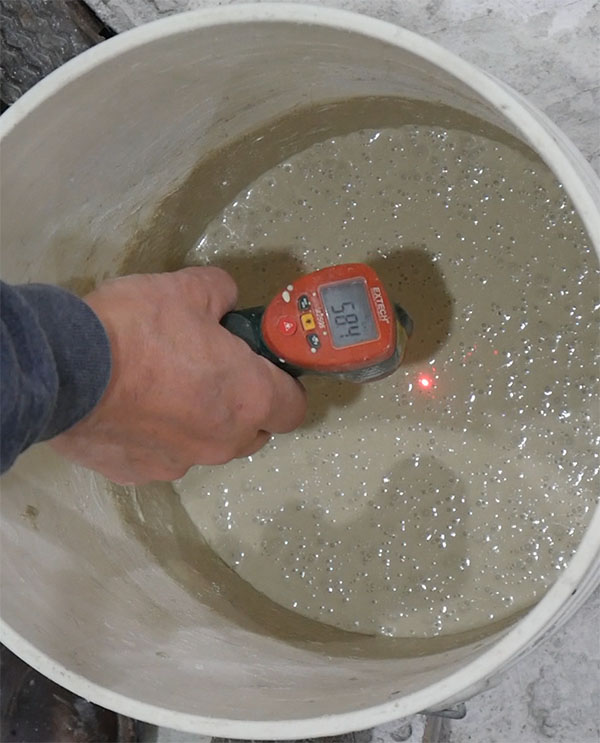
Ice in the mix water brings the concrete down to the target temperature.
Get the mix consistency right
PowerBlend and PowerPack already contain UltraFlow superplasticizer. For direct casting, you add a small amount more to reach the right flow. Add it a little at a time and check the mix after each addition. The product pages list dosage rates.
- Too stiff: The concrete won’t flow easily or fully fill the mold. Stiff concrete behaves like a paste rather than a fluid, so bubbles can’t rise through it.
- Too fluid: Too much superplasticizer makes the mix segregate. Sand and fibers settle to the bottom, and a watery, foamy layer forms on top.
- Just right: The concrete flows like pancake batter while the sand and fibers stay evenly distributed.

Pinholes left by trapped air in a casting made with a stiff mix.
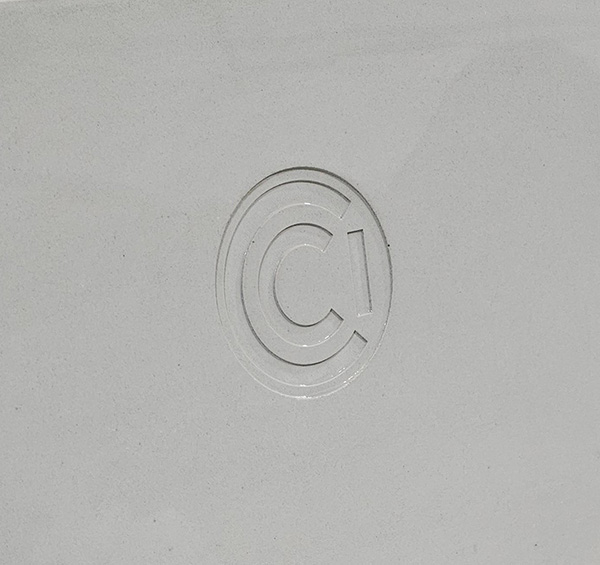
A casting made with the right fluidity, with a clean surface and crisp logo detail.
Let trapped air escape before pouring
This is one of the most important things you can do to reduce pinholes.
- Finish mixing all ingredients. Add the fibers last, gradually and at slow speed, so you don’t whip air back into the mix.
- Stop mixing and let the concrete sit undisturbed.
- Watch as trapped air bubbles rise to the surface and escape.
- Wait 10 to 15 minutes, checking every few minutes as the bubbles decrease.
- Sweep the surface with a trowel to clear the bubbles and see how much air is still coming up.
Don’t remix the concrete after it rests, because remixing puts air back in. Stick to the 10 to 15 minutes, too. Even a chilled mix warms as it sits, and warm concrete thickens and doesn’t pour well.

Air bubbles rising to the surface of the resting mix.
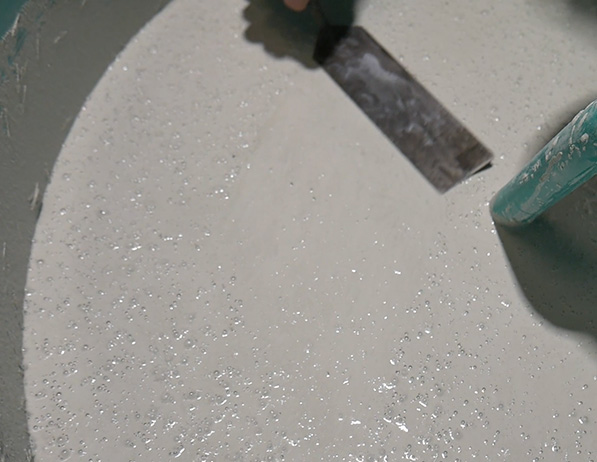
Sweeping the surface with a trowel clears the bubbles. After sweeping, watch how much air is still rising before you pour.
Pour to suit the mold
Pour slowly enough to give air bubbles time to escape before more concrete traps them. How you pour depends on the shape of the casting.
Shallow castings, such as slabs and panels
- Pour a thin layer into the mold.
- Spread it by hand across the mold surface to a depth of about ¼ inch (6 mm). This releases more air from the concrete right at the mold face, which is the surface you’ll see.
- Fill the rest of the form’s depth.
- Stir the concrete along the edges of the form to prevent casting lines.
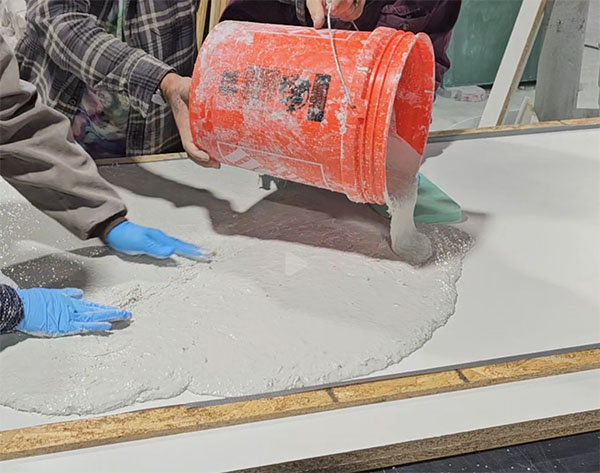
Spreading a thin first layer across the mold surface by hand.
Deep castings, such as vessel sinks and 3D molds
- Pour slowly from one location. Any spot on the mold works.
- Let the concrete flow naturally through the mold.
- Tap, jiggle, or shake the mold to help the concrete flow and release air.
Take extra care with deep castings, because vertical faces such as sink walls are where direct cast GFRC is most prone to pinholes.
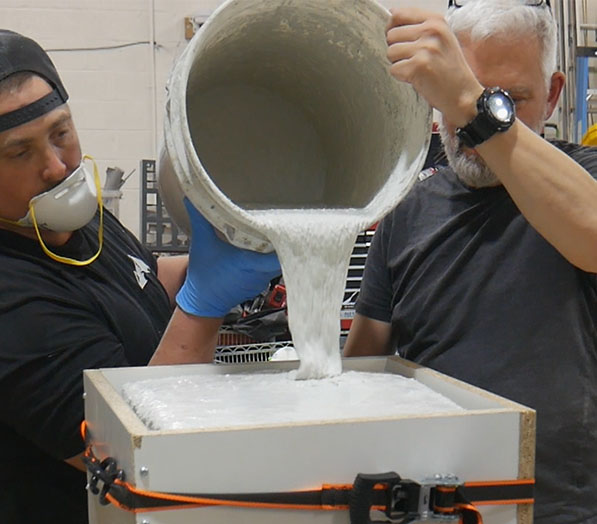
Pouring a deep mold slowly from one location.
Quick checklist for pinhole-free direct casting
- Chill the concrete to 55 to 60°F (13 to 16°C).
- Get the fluidity right without segregation, adding extra UltraFlow a little at a time.
- Add fibers last, at slow speed.
- Let the mix rest undisturbed for 10 to 15 minutes.
- Sweep the surface and watch the air release before pouring.
- Don’t remix after resting.
- Pour slowly, using the right technique for the mold, and stir the edges of shallow forms.
If pinholes still appear
These techniques give you the best chance at a pinhole-free surface, but no method guarantees one. If pinholes show up after demolding, or grinding opens up bubbles just below the surface, fill them with grout before you seal. How to Grout to Fill Pinholes in a Concrete Countertop covers grout recipes, application, and finishing.
Frequently asked questions
Do I need to chill the concrete in cool weather? Yes, for direct cast and SCC mixes. Chilling is standard practice, not just a hot-weather fix, because it extends working time and improves flow.
Should I add a defoamer to PowerBlend or PowerPack? No. Both already contain UltraDense in the right proportion, and adding more can backfire, because overdosing a defoamer can increase air content and weaken the concrete. The defoamer turns tiny bubbles into larger ones, but those bubbles still need a fluid mix and time to escape, which is why resting the mix and pouring slowly matter so much.
Can I use a vibrating table for GFRC? No, vibrating tables aren’t used for GFRC. For deep molds, tap, jiggle, or shake the mold instead.
How long should the mix rest before pouring? About 10 to 15 minutes, until the bubbles rising to the surface have mostly stopped. Don’t remix it afterward.
What causes casting lines on the edges? Casting lines can form along the edges of shallow forms as you fill them. Stirring the concrete along the edges while you fill prevents them.
Better surfaces start before the pour
Better surface quality starts before the concrete enters the mold. A cool, properly fluid mix and a little patience while the air escapes are what let you capture very fine surface detail like the pieces below.
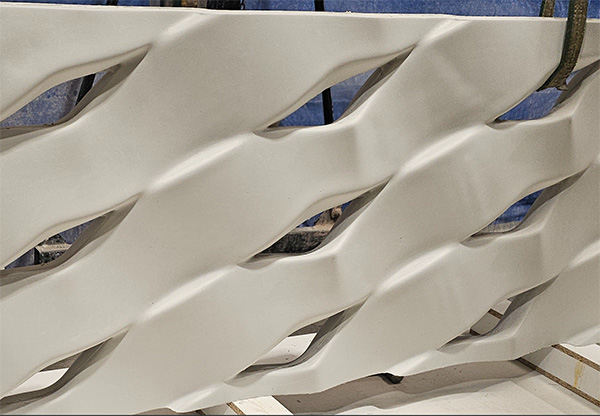
A 3D wave panel with very fine surface detail. Created by RAW Creative in Denver using PowerBlend.
If you haven’t tried it yet, PowerBlend is the all-in-one GFRC mix this article is written for. It already contains the defoamer, polymer, pozzolans, and a base dose of superplasticizer. For direct casting, you add water, ice, fibers, and a little extra UltraFlow to reach a pourable consistency.