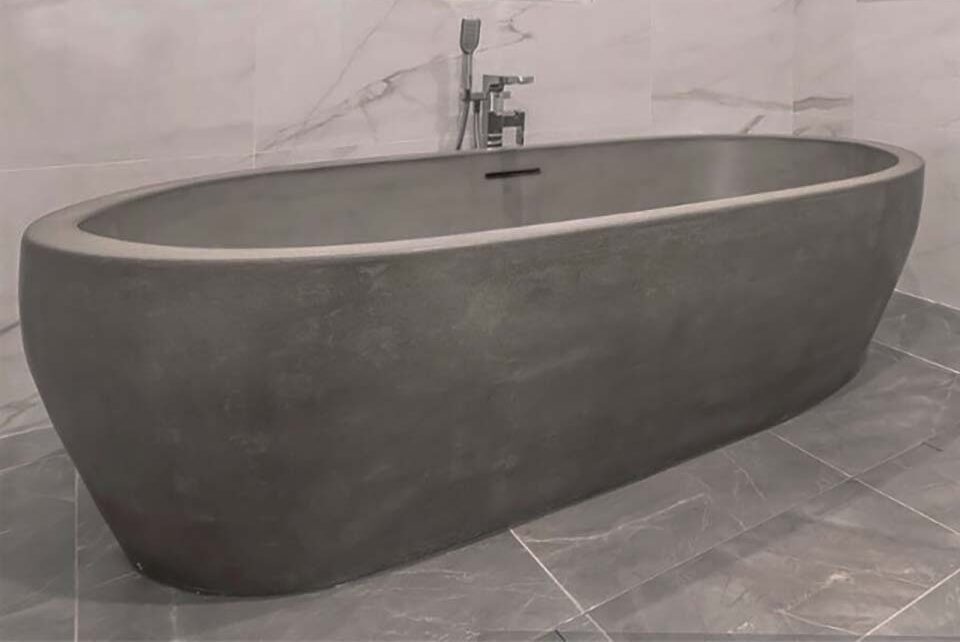
This concrete bathtub was so massive it required a crane. Getting it into the client’s bathroom presented the kind of challenge that separates hobbyists from craftsmen.
For Brent Indenbosch, founder of Moda Concrete Studio in British Columbia, it was just another Tuesday.
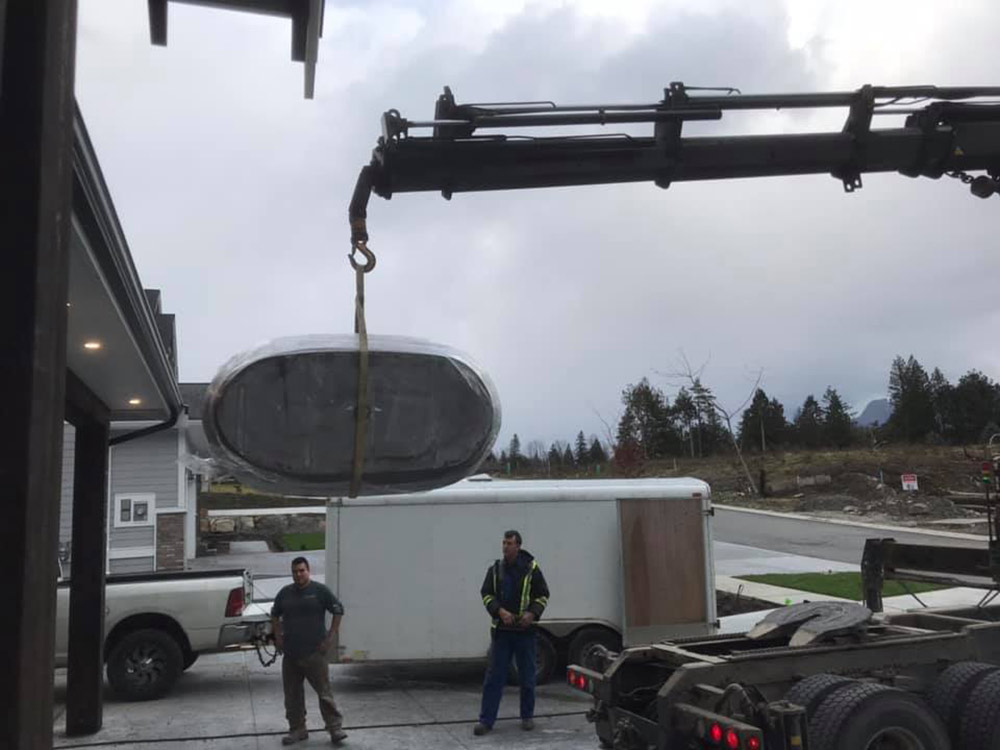
“When you make massive custom concrete creations, sometimes delivery is the trickiest part,” Indenbosch explains with the matter-of-fact tone of someone who has solved this problem more than once. The bathtub, one of his early signature pieces, proved what he already knew: concrete could do far more than most people imagined.
That realization didn’t happen overnight. It took a decade of pouring driveways and patios, a pivotal decision to invest in specialized training, and a willingness to completely reimagine what concrete could become.
The Foundation: Learning the Hard Way
Concrete entered Brent’s life early. “Helping my grandfather pour all sorts of jobs was my introduction to concrete,” he recalls. “It taught me the value of hard work and precision, and laid the groundwork for a lifelong dedication to the craft.” Those early lessons in discipline and attention to detail would prove invaluable, though he couldn’t have known it at the time.
At just 12 years old, while working on a dairy farm, Brent met Tim. That friendship would eventually become one of the cornerstones of his business, initially named Diamond Finish Concrete Countertops. But first came years of heavy civil concrete work on bridges and infrastructure projects. It was demanding, skilled labor that paid well. It was also, increasingly, not enough.
After over a decade of dedication and experience within the concrete industry pouring driveways and patios, Brent decided to make a transformative career move. He wanted to create something that required meticulous detail and precision, something that went beyond the utilitarian nature of flatwork.
In February 2014, he attended training at The Concrete Countertop Institute. That time at CCI represented a turning point. The training gave him the technical foundation, finishing techniques, and engineering principles that would underpin everything he created afterward. Understanding concrete chemistry, mix design, and professional finishing methods opened a door he hadn’t known existed. What followed was years of applying those skills, refining his craft, and pushing the boundaries of what he’d learned.
“You can teach someone, but everyone’s kind of different, so you have to figure some of it out yourself,” he notes. That combination of formal education and experiential learning became his approach to mastering the craft.
Pushing Boundaries: The Fiber Optic Countertop
Some craftsmen play it safe, sticking to proven techniques and standard designs. Brent Indenbosch is not that kind of craftsman.
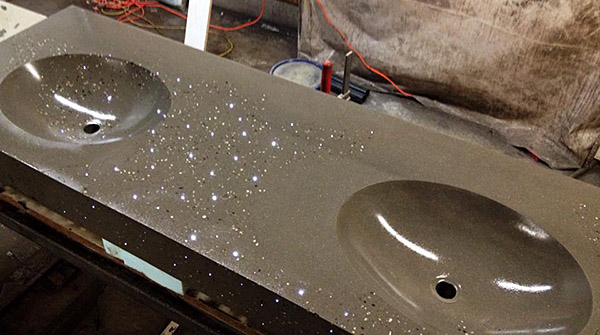
One of his most striking early creations was a bathroom countertop that incorporated fiber optic lighting directly into the concrete surface. Armed with the technical knowledge from CCI, particularly understanding concrete chemistry and finishing techniques, Brent began experimenting with ideas that would have seemed impossible during his flatwork days. The piece, featured in a kitchen and bath show, demonstrated both technical ambition and creative vision.
“That was all fiber optics and they’re all connected to the same illuminator,” Indenbosch explained. “There’s probably about 300 or 400 feet of fiber optics in that. There’s one little LED light bulb in there and the light shines through, kind of like water going through a hose.”
The dual-sink vanity, with its embedded decorative stone aggregate and illuminated surface, represented something more than technical skill. It showed a willingness to experiment, to push concrete into territory where it hadn’t traditionally gone. That experimental mindset would define his work moving forward.
The Business of Making Art
Creating beautiful work is one thing. Building a sustainable business around it is something else entirely.
Early on, Brent offered clear-eyed advice for anyone considering a similar path: “Make sure you’re prepared to invest in the right tools.” It sounds obvious until you realize how many aspiring craftsmen underestimate this reality. The right equipment isn’t cheap, and cutting corners shows in the final product.
Space matters too. “You need a decently sized shop,” he emphasized, a lesson learned from experience. Creating large-scale pieces requires room to work, and trying to fabricate in cramped quarters leads to compromises in quality and efficiency.
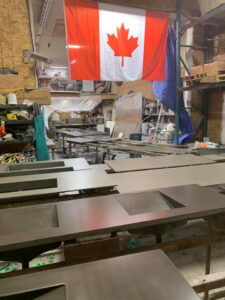
Time management proved equally crucial. Being aware of the time involved in creating a given project helped him price work accurately and manage client expectations. Some pieces took longer than anticipated, and those early miscalculations taught valuable lessons about estimating and scheduling.
Like many contractors making the transition to running their own business, Brent initially juggled multiple jobs while building Diamond Finish Concrete Countertops. It’s an exhausting but necessary phase, maintaining cash flow while developing a client base. The work ethic instilled by his grandfather served him well during those demanding years.
Evolution and Partnership: Becoming Moda Concrete Studio
Success didn’t happen alone. After years of working separately in the concrete industry, Brent reconnected with Tim, that friend from the dairy farm decades earlier, and together they formed Diamond Finish Concrete Countertops.
“When we would work together, nothing needed to be said,” Brent says. “We both knew exactly what the other guy was thinking and worked in perfect harmony. It was a connection built on trust and shared vision.”
That kind of partnership can’t be manufactured. It develops over years of knowing each other, understanding each other’s strengths, and maintaining mutual respect. Tim brought not just skills but a shared dedication to the craft.
As Diamond Finish Concrete Countertops grew and thrived in the niche market, Brent and Tim recognized they needed additional expertise to take the business to the next level. They turned to Frank, who brought business acumen from his experience growing a multi-location irrigation company.
“Investing in Moda Concrete Studio was a natural step for me,” Frank reflects. “I’ve always admired Brent’s artistic abilities and the unique products he creates.”
The rebranding to Moda Concrete Studio signaled more than a name change. It represented an evolution in scope and ambition. “Although the Moda brand is a new endeavor, concrete is in our bones,” Tim says. “The goal has always been the same: to provide high-quality craftsmanship to our customers.”

The Philosophy: Concrete as Canvas
Today, Moda Concrete Studio operates from British Columbia with a clear philosophy: push and redefine the boundaries of what concrete can do.
“If you can think it, we can craft it,” Tim emphasizes. “We’re not just building concrete pieces; we’re creating a part of your story, something unique and personal that stands the test of time.”
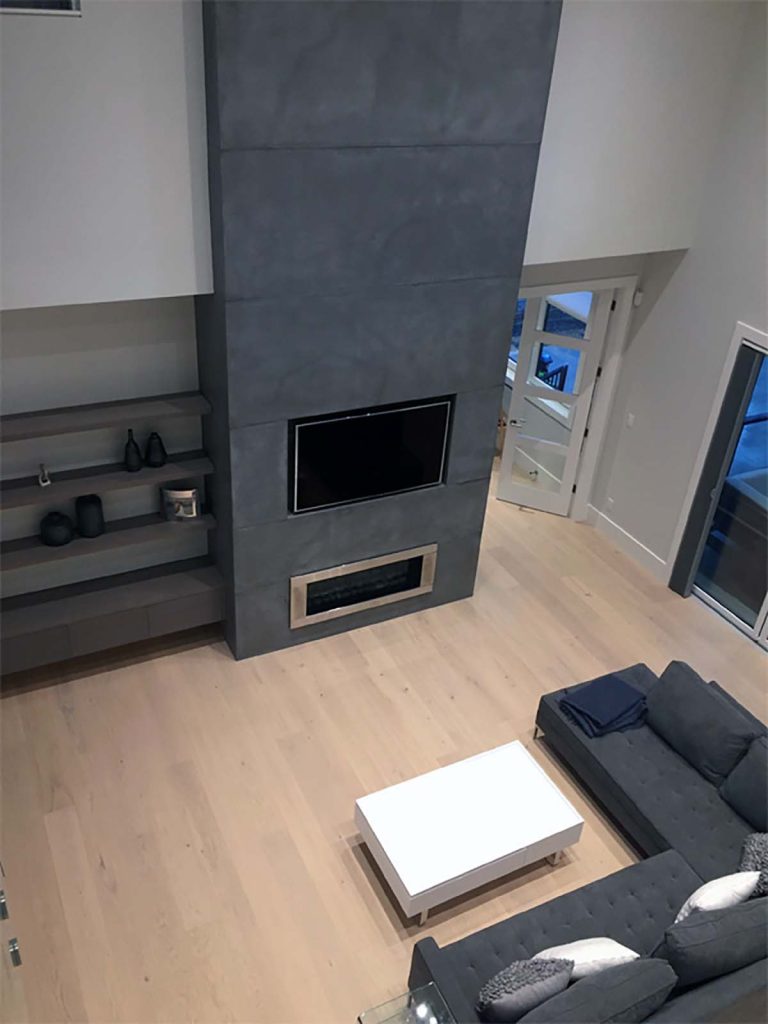
That approach manifests in the range of work they produce. Kitchen countertops with custom colors and finishes. Massive 17-foot fireplace hearths installed as single pieces. Outdoor kitchens that withstand Canadian winters. Tables that serve as functional art. Bathroom vanities ranging from classic to ultra-modern. Business spaces that make immediate visual impact.
Each piece begins with consultation and collaboration. The team develops custom colors to match client vision, creating samples for approval. They use advanced templating from finished cabinetry or CADD drawings. Forming and casting takes two to four weeks, with meticulous polishing, sealing, and quality inspection before installation.
The process reflects Brent’s original insight: concrete deserves the kind of care and precision usually reserved for fine woodworking or metalwork. By treating it as a canvas rather than just a building material, he unlocked possibilities most contractors never consider.


The Proof in the Portfolio
Client testimonials tell the story numbers can’t capture. “Without a doubt Brent was the best contractor throughout my entire reno,” writes Debbie R. “He did so much concrete work for me and everything turned out PERFECT! On top of that, he was reliable, honest, trustworthy and fair. His quality work is second to none.”
Another client noted simply, “It’s even better than we imagined. We had the best experience working with you! Dreaming up future projects.”
That last line matters. When clients immediately start planning their next project, you’ve done more than deliver a product. You’ve created an experience they want to repeat.
Looking Forward: A Decade of Growth
More than a decade has passed since Brent attended that training session at The Concrete Countertop Institute in February 2014. He’s continuously refined his skills and deepened his knowledge of the craft, always looking for new techniques and applications.
The transition from solo contractor to business owner to leader of a team represents significant growth. But the core hasn’t changed: a commitment to craftsmanship, a willingness to experiment, and a belief that concrete can do far more than most people imagine.
“Concrete is in our bones,” Brent and his team emphasize. It’s not marketing speak. It’s a statement of fact backed by decades of combined experience, hundreds of completed projects, and a portfolio that ranges from elegant to audacious.
From helping his grandfather pour jobs as a child to operating a crane to install massive custom bathtubs, Brent Indenbosch has built more than a business. He’s built proof that with proper technical training, the right partners, and the right mindset, concrete becomes limited only by imagination.
And in British Columbia, Moda Concrete Studio keeps pushing those limits.